Explain This: AI security intake needs an evidence ladder, not a feed
If your team is triaging AI security from a social feed, you need an evidence ladder before noise hardens into policy.

Explain This: AI security intake needs an evidence ladder, not a feed
The problem is not that AI security news moves too fast. The problem is that too many teams treat a screenshot, a Reddit thread, a CERT advisory, and a vendor incident writeup as if they carry the same evidentiary weight.
That is how bad guidance gets written. It is also how legal and security teams burn time on hype while missing the one primary artifact that actually changes exposure. The thesis is simple: AI security intake needs an evidence ladder because reasonableness starts with source quality, not volume.
What It Is
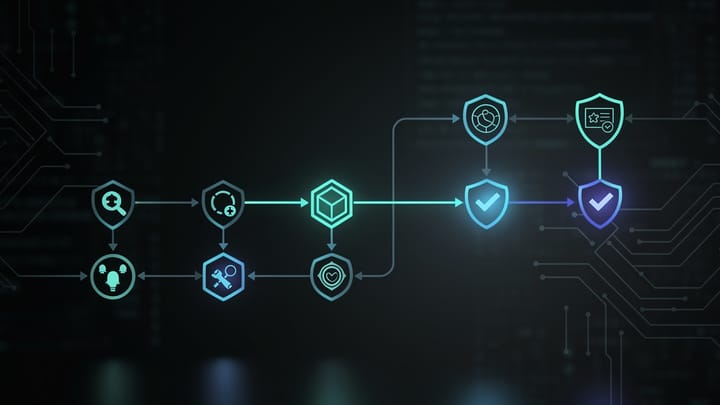
An evidence ladder is a ranking model for incoming security claims.
At the top are primary artifacts. That means official advisories, maintainer disclosures, incident writeups with technical detail, standards guidance, and documentation that defines how a protocol or product actually works. If Microsoft documents the OAuth device authorization flow, or CERT/CC publishes a vulnerability note, that belongs above any commentary about it.
The middle is operator signal. This is where practitioner threads help. Reddit, Slack communities, and analyst commentary can tell you what teams are seeing in the wild, what is confusing people, and what follow-up questions your executives are about to ask.
At the bottom is amplification. Reposts, screenshots, generic roundups, and drama-heavy summaries may point to something real, but they are not evidence by themselves.
Why It Matters
AI security stories collapse several categories into one feed: product misuse, model risk, package compromise, insecure code generation, agent framework flaws, and plain old phishing wrapped in AI language. If your intake process does not separate those buckets, every story looks like an emergency.
The last two weeks are a good example. Microsoft's reporting on device code phishing describes a real attack chain against Microsoft 365 users. CERT/CC's CrewAI note describes a vulnerability pattern in an agent framework. NIST's generative AI profile is not an incident at all, but it does tell operators what "reasonable" governance and testing should look like. Those are three different kinds of signal. They should not trigger the same meeting or the same memo.
This matters for lawyers because policy built on weak sourcing is hard to defend after the fact. It matters for operators because the fastest way to lose credibility is to escalate claims you cannot trace back to a primary artifact.
What to Do This Week
- Define your top-tier sources. List the official advisories, repositories, standards bodies, and vendor security blogs tied to the AI tools your organization actually uses.
- Require source tracing before escalation. If a claim cannot be traced to a primary artifact, label it unverified and keep it out of policy language.
- Separate incident signal from control guidance. A live exploitation report should trigger exposure review. A standards document should trigger control mapping. Do not run both through the same workflow.
- Use practitioner chatter correctly. Reddit and operator communities are useful for pattern recognition and urgency calibration, not as core evidence.
- Keep one running watchlist. Track recurring themes like OAuth abuse, insecure agent tool use, poisoned packages, and overclaimed "zero-day" findings so the same panic does not restart every week.
A policy is not a shield. It is a paper trail. If your intake process cannot explain why one source moved you to act and another did not, your AI security program is still running on vibes.
Subscribe if you want the legal version of incident response, not the PR version.
Sources
- Inside an AI-enabled device code phishing campaign
- CERT/CC Vulnerability Note VU#221883: CrewAI contains multiple vulnerabilities
- NIST AI 600-1, Artificial Intelligence Risk Management Framework: Generative Artificial Intelligence Profile
- New tools and guidance: Announcing Zero Trust for AI
- Reddit discussion: What sources are you following for AI / Agentic security news, writeups, etc?