Explain This: CVE Instability Exposes the Limits of ID-Based Triage
The CVE funding scare matters because too many security programs still treat a CVE ID as the work, not the starting point.
Explain This: CVE Instability Exposes the Limits of ID-Based Triage
The panic over CVE funding this month landed because a lot of teams quietly rely on one shared assumption: if the CVE program exists, vulnerability management is still legible. That assumption was always thinner than it looked.
The thesis is simple. A wobble in CVE funding does not just threaten a naming system, it exposes why security teams cannot outsource vulnerability triage to CVE numbers alone.
What It Is
CVE is the common naming layer for publicly disclosed vulnerabilities. It gives defenders, vendors, researchers, scanners, lawyers, and insurers a shared identifier so everyone can talk about the same flaw without inventing a new label each time.
That shared naming layer is foundational, but it is not the whole system. The CVE program assigns identifiers. NVD adds enrichment and scoring. CISA's Known Exploited Vulnerabilities catalog tells federal agencies, and increasingly everyone else, which flaws are already being used in the wild. Those are related functions, not interchangeable ones.
This is why the recent contract anxiety mattered. If the naming layer looks unstable, every downstream process starts to feel less reliable: scanner matching, exposure tracking, legal hold scoping, patch communications, board updates, and the inevitable question after an incident, which is whether the company had notice.
Why It Matters
Security teams often talk as if a CVE entry is the vulnerability-management workflow. It is not. It is the index card.
The real work is still local. You have to know whether the affected product is in your estate, whether the vulnerable feature is enabled, whether exploit code exists, whether compensating controls change exposure, and whether an attacker actually cares. A CVE number helps coordinate that work. It does not complete it.
That distinction matters even more now because the volume problem is getting worse. The reporting pipeline is under pressure, AI-assisted discovery is speeding up disclosure volume, and practitioners on Reddit are already asking the right uncomfortable question: what happens if the common naming system stalls, fragments, or becomes harder to trust as a timing signal?
For operators, the legal point is straightforward. "We were waiting for the CVE" will age badly if a plaintiff can show vendor advisories, exploit chatter, KEV listings, or internal telemetry gave enough warning to act anyway. A policy is not a shield. It is a paper trail.
What "reasonable" looks like is broader than watching CVE feeds. It means maintaining an asset map, tracking vendor advisories directly for critical suppliers, using threat-informed prioritization, and documenting why a given vulnerability was urgent, deferred, or not applicable.
What to Do This Week
- Identify the ten vendors or platforms that would hurt most if their advisories stopped flowing cleanly through your existing tools.
- Confirm you have a direct advisory source for each of them, not just scanner coverage or CVE feed dependence.
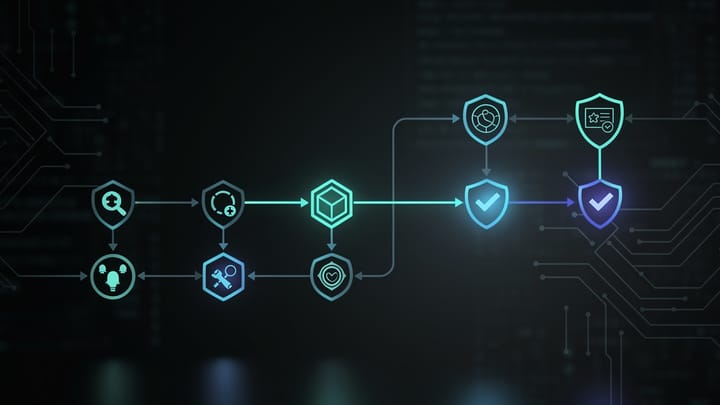
- Separate your workflow into four steps and test each one: discovery, applicability, exploitability, and remediation.
- Add one documented decision rule for when you will act before formal enrichment or scoring appears.
- Brief legal and leadership on a simple point: a missing or delayed CVE identifier does not erase notice if other credible signals existed.
The healthier frame is this: CVE is critical infrastructure for coordination, not a substitute for judgment. If this week's funding scare felt existential, that is your signal to harden the parts of your process that were leaning on a naming system to do an operator's job.
Subscribe if you want cybersecurity and legal analysis that treats evidence, not labels, as the thing that matters.